Sponsored
Sponsored
Free Edition
Verified Content
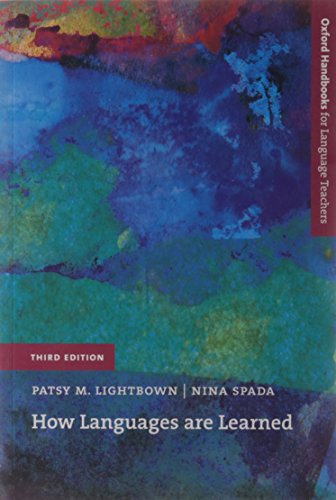
How Languages are Learned
Overview
An introduction to the main theories of first and second language acquisition (now in a new, updated edition).
Unlike many introductions to the field of language acquisition research, How Languages are Learned does not assume that you are already familiar with research methods or theories. This makes it especially suitable if you are a trainee teacher or a practising teacher working independently to develop your professional knowledge. It is written in a clear, readable style without unnecessary technical jargon - this has helped to make it a standard text for trainee teachers throughout the world.
There are evaluations and case studies throughout the book so that you can see a practical context for the research ideas you are reading about. Many of these examples are taken directly from real first and second language classrooms. There are also a number of opportunities for you to practise some of the observation and analysis techniques which are used in the research described in the book.
The book is organized into seven chapters:
Chapter 1: 'Language Learning in early childhood' (Includes a new section on childhood bilingualism.)
Chapter 2: 'Explaining second language learning' (Includes new material for the 3rd edition on skill learning, connectionism, and the 'noticing hypothesis'.)
Chapter 3: 'Individual differences in second language learning' (Topics covered include: intelligence, aptitude, learning styles, personality, motivation and attitudes, identity and ethic group affiliation, and learner beliefs.)
Chapter 4: 'Learner language' (Describes the features and sequence of language development and includes discussion of how second language learning is affected by the student's first language)
Chapter 5: 'Observing learning and teaching in the second language' (Looks at different learning environments and then discusses ways of observing and reporting on them.)
Chapter 6: 'Second language learning in the classroom' (Contains six practical proposals for classroom teaching based on research findings and insights.)
Chapter 7: 'Popular ideas about language learning revisited' (The authors list and give their personal perspective on some commonly held beliefs about language learning.)
There is a Glossary to explain new and technical terms used in the book. There is also a list of suggestions for further reading at the end of each chapter, as well as a full bibliography at the end of the book.
Unlike many introductions to the field of language acquisition research, How Languages are Learned does not assume that you are already familiar with research methods or theories. This makes it especially suitable if you are a trainee teacher or a practising teacher working independently to develop your professional knowledge. It is written in a clear, readable style without unnecessary technical jargon - this has helped to make it a standard text for trainee teachers throughout the world.
There are evaluations and case studies throughout the book so that you can see a practical context for the research ideas you are reading about. Many of these examples are taken directly from real first and second language classrooms. There are also a number of opportunities for you to practise some of the observation and analysis techniques which are used in the research described in the book.
The book is organized into seven chapters:
Chapter 1: 'Language Learning in early childhood' (Includes a new section on childhood bilingualism.)
Chapter 2: 'Explaining second language learning' (Includes new material for the 3rd edition on skill learning, connectionism, and the 'noticing hypothesis'.)
Chapter 3: 'Individual differences in second language learning' (Topics covered include: intelligence, aptitude, learning styles, personality, motivation and attitudes, identity and ethic group affiliation, and learner beliefs.)
Chapter 4: 'Learner language' (Describes the features and sequence of language development and includes discussion of how second language learning is affected by the student's first language)
Chapter 5: 'Observing learning and teaching in the second language' (Looks at different learning environments and then discusses ways of observing and reporting on them.)
Chapter 6: 'Second language learning in the classroom' (Contains six practical proposals for classroom teaching based on research findings and insights.)
Chapter 7: 'Popular ideas about language learning revisited' (The authors list and give their personal perspective on some commonly held beliefs about language learning.)
There is a Glossary to explain new and technical terms used in the book. There is also a list of suggestions for further reading at the end of each chapter, as well as a full bibliography at the end of the book.
Finding high-quality digital editions shouldn't be a challenge. With instant access to our curated library, you can start your journey with Aftermath immediately. Whether on your phone, tablet, or e-reader, the story of Raleigh's life is presented in a format designed for modern readers.
To get started finding How Languages are Learned, you are right to find our website which has a comprehensive collection of titles listed. Our library is one of the most comprehensive resources for free digital reading materials, providing verified and safe content for book lovers worldwide.


36,114 currently reading


152,889 want to read
Sponsored
Sponsored
Book details & editions
| ISBN | 0194422240 |
| Publisher | N/A |
| Publication date | June 1993 |
| Language | English |
| Pages | pages |
| Reading Options | PDF · EPUB · Mobi |
Sponsored
Sponsored



Ratings & Reviews
5 ★
81.4%
4 ★
14.6%
3 ★
3%
2 ★
0.6%
1 ★
0.4%
4.76
BlueReads Choice
Sponsored
Write a Review
Community Reviews
Sort by:
