Sponsored
Sponsored

Free Edition
Verified Content
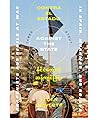
Famous Speeches of the Eight Chicago Anarchists in Court (Mass Violence in America Series)
Overview
Back in print for the first time in decades. A classic in US labor history.
On May 1, 1886, Albert and Lucy Parsons led upwards of 80,000 striking workers and their supporters through the streets of Chicago. Across the country workers were advocating for the eight-hour day. On May 3, police killed two striking workers on the west side of Chicago. In response, a rally was called for May 4, 1886, at Haymarket Square in Chicago. There a bomb was thrown, eventually killing seven policeman and wounding dozens of others. Eight anarchists were four were hanged, two had their sentences commuted, one served six years, and one died by suicide in his cell. Accused and convicted of conspiracy, the state of Illinois couldn't prove any of them threw the bomb, so they instead tried to kill the anarchist movement. This miscarriage of justice ignited labor movements across the United States and around the world. Collected here are the voices of the accused from their sentencing in the fall of 1886.
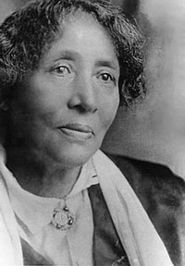
For decades after Albert was hanged, Lucy Parsons carried on her husband's legacy through writing, public speaking, and publishing The Famous Speeches of the Eight Chicago Anarchists. The chilling and defiant words of the accused—six of whom were not even at Haymarket Square the night of the bombing—are gripping still, these many years later.
"If you think that you can crush out these ideas that are gaining ground more and more every day, if you think you can crush them out by sending us to the gallows; if you would once more have people suffer the penalty of death because they have dared to tell the truth—and I defy you to show us where we have told a lie—I say, if death is the penalty for proclaiming the truth, then I will proudly and defiantly pay the costly price! Call your hangman!" —August Spies
"For such a government as this I can feel no respect, and will combat them, despite their power, despite their police, despite their spies. I hate and combat, not the individual capitalist, but the system that gives him those privileges. My greatest wish is that workingmen may recognize who are their friends and who are their enemies. As to my conviction, brought about as it was, through capitalistic influence, I have not one word to say." —George Engel
"I will ask you to hang me, too; for I think it is more honorable to die suddenly than to be killed by inches. I have a family and children; and if they know their father is dead, they will bury him. They can go to the grave, and kneel down by the side of it; but they can't go to the penitentiary and see their father, who was convicted for a crime that he hasn't had anything to do with. That is all I have got to say. Your honor, I am sorry I am not to be hung with the rest of the men." —Oscar Neebe
Speeches from August Spies, Michael Schwab, Oscar Neebe, Adolph Fischer, Louis Lingg, George Engel, Samuel Fielden, Albert Parsons are accompanied by a preface and introduction from Lucy Parsons, foreword by labor historian David R. Roediger, and a public speech from 1901 commemorating the Haymarket anarchists by poet and writer Voltairine de Cleyre.
On May 1, 1886, Albert and Lucy Parsons led upwards of 80,000 striking workers and their supporters through the streets of Chicago. Across the country workers were advocating for the eight-hour day. On May 3, police killed two striking workers on the west side of Chicago. In response, a rally was called for May 4, 1886, at Haymarket Square in Chicago. There a bomb was thrown, eventually killing seven policeman and wounding dozens of others. Eight anarchists were four were hanged, two had their sentences commuted, one served six years, and one died by suicide in his cell. Accused and convicted of conspiracy, the state of Illinois couldn't prove any of them threw the bomb, so they instead tried to kill the anarchist movement. This miscarriage of justice ignited labor movements across the United States and around the world. Collected here are the voices of the accused from their sentencing in the fall of 1886.
For decades after Albert was hanged, Lucy Parsons carried on her husband's legacy through writing, public speaking, and publishing The Famous Speeches of the Eight Chicago Anarchists. The chilling and defiant words of the accused—six of whom were not even at Haymarket Square the night of the bombing—are gripping still, these many years later.
"If you think that you can crush out these ideas that are gaining ground more and more every day, if you think you can crush them out by sending us to the gallows; if you would once more have people suffer the penalty of death because they have dared to tell the truth—and I defy you to show us where we have told a lie—I say, if death is the penalty for proclaiming the truth, then I will proudly and defiantly pay the costly price! Call your hangman!" —August Spies
"For such a government as this I can feel no respect, and will combat them, despite their power, despite their police, despite their spies. I hate and combat, not the individual capitalist, but the system that gives him those privileges. My greatest wish is that workingmen may recognize who are their friends and who are their enemies. As to my conviction, brought about as it was, through capitalistic influence, I have not one word to say." —George Engel
"I will ask you to hang me, too; for I think it is more honorable to die suddenly than to be killed by inches. I have a family and children; and if they know their father is dead, they will bury him. They can go to the grave, and kneel down by the side of it; but they can't go to the penitentiary and see their father, who was convicted for a crime that he hasn't had anything to do with. That is all I have got to say. Your honor, I am sorry I am not to be hung with the rest of the men." —Oscar Neebe
Speeches from August Spies, Michael Schwab, Oscar Neebe, Adolph Fischer, Louis Lingg, George Engel, Samuel Fielden, Albert Parsons are accompanied by a preface and introduction from Lucy Parsons, foreword by labor historian David R. Roediger, and a public speech from 1901 commemorating the Haymarket anarchists by poet and writer Voltairine de Cleyre.
Finding high-quality digital editions shouldn't be a challenge. With instant access to our curated library, you can start your journey with Aftermath immediately. Whether on your phone, tablet, or e-reader, the story of Raleigh's life is presented in a format designed for modern readers.
To get started finding Famous Speeches of the Eight Chicago Anarchists in Court (Mass Violence in America Series), you are right to find our website which has a comprehensive collection of titles listed. Our library is one of the most comprehensive resources for free digital reading materials, providing verified and safe content for book lovers worldwide.


36,114 currently reading


152,889 want to read
Sponsored
Sponsored
Book details & editions
| ISBN | 0405013302 |
| Publisher | N/A |
| Publication date | March 2010 |
| Language | English |
| Pages | pages |
| Reading Options | PDF · EPUB · Mobi |
Sponsored
Sponsored



Ratings & Reviews
5 ★
81.4%
4 ★
14.6%
3 ★
3%
2 ★
0.6%
1 ★
0.4%
4.76
BlueReads Choice
Sponsored
Write a Review
Community Reviews
Sort by: