Sponsored
Sponsored
Free Edition
Verified Content
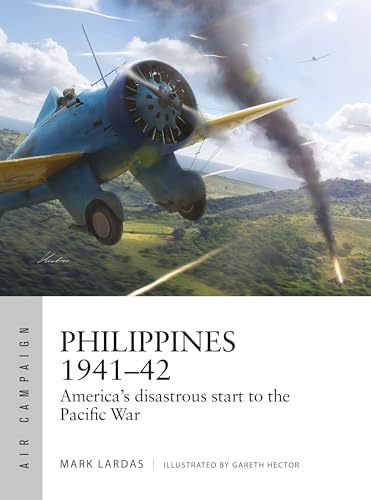
Philippines 1941–42: America's Disastrous Start to the Pacific War (Osprey Air Campaign #62)
Overview
The weeks after Pearl Harbor saw Japan destroy the well-prepared US air forces in the Philippines. Fully illustrated, this studies the Pacific War's little-known first major air campaign.
On December 7, 1941, the Japanese not only attacked Pearl Harbor,but also struck at US and allied bases throughout the Pacific, including the USA's biggest overseas territory, the Philippines. However, that was an air battle the US was expecting. The USAAF had beefed up its assets in the Philippines, sending nearly a quarter of its available B-17s to the Far Eastern Air Force (FEAF). It could also call on the Philippine Army Air Corps (PAAC).
Aviation historian Mark Lardas explains how despite that, in a campaign that lasted barely a month, Japan's air forces routed both the FEAF and the PAAC, gaining air superiority and permitting Imperial Army troops undisturbed access to the Philippine coast. Within a week Japan ruled the skies over Luzon. Two weeks later it had air superiority over all the Philippines. After a month, its control was so complete the Imperial Army felt confident to move its 5th Air Group back out of the Philippines. While desultory air combat would continue off and on for the next three months, the issue was decided by 5 January 1942.
Packed with original artwork, 3D diagrams, maps and photos, this is the history of how the first air campaign of the Pacific War turned into a humiliating defeat for the United States.


36,114 currently reading


152,889 want to read
Sponsored
Sponsored
Book details & editions
| ISBN | 1472870867 |
| Publisher | |
| Publication date | October 2026 |
| Language | English |
| Pages | 241 pages |
Sponsored
Sponsored




Ratings & Reviews
5 ★
76%
4 ★
18%
3 ★
4%
2 ★
1%
1 ★
1%
4.50
BlueReads Choice
Sponsored
Write a Review
Community Reviews
Sort by: