Sponsored
Sponsored
Free Edition
Verified Content
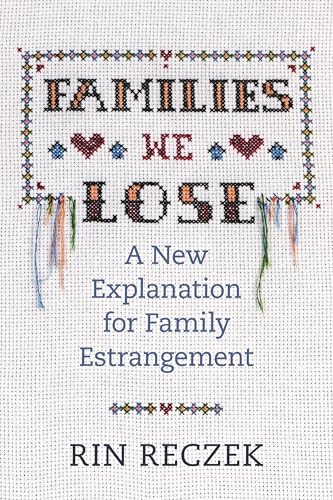
Families We Lose: A New Explanation for Family Estrangement
Overview
As society becomes more polarized around political and cultural beliefs, family estrangement has received increased attention. Going no contact with a parent, sibling, grandparent, or other extended family member is often portrayed as a sign of the further fraying of society or as a result of selfish choices that privilege the rights of the individual over the ability to compromise.
In Families We Lose, Rin Reczek takes a different view, arguing that going no contact isn’t done on a whim by selfish people or due only to specific individual circumstances. Instead she argues that contemporary family estrangement is indicative of a more fundamental culture clash in the very meaning and expectations of family in the U.S. today. Reczek shows that estrangement is sparked by a confrontation between the traditional culture, which dictates family of origin as unconditionally forever, and a rivaling idea of family that values the quality of contact, focusing on equity, accountability, personal and relationship evolution, mutual respect, and maturity.
Based on in-depth interviews with a diverse set of adults who are ‘no-contact' with family-of-origin members, Reczek reveals how these adults set new expectations about family. She shows that estrangement can be a path to healing, self-acceptance, and democratized configurations of family around the shared values of mutuality and intentional community. Shifting the focus from family reunification to family freedom, Families We Lose imagines a world where adults are empowered to choose who gets to be in their family even if it means leaving some ties behind.


36,114 currently reading


152,889 want to read
Sponsored
Sponsored
Book details & editions
| ISBN | 1479838780 |
| Publisher | |
| Publication date | November 2026 |
| Language | English |
| Pages | 272 pages |
Sponsored
Sponsored




Ratings & Reviews
5 ★
58%
4 ★
28%
3 ★
10%
2 ★
3%
1 ★
1%
4.04
BlueReads Choice
Sponsored
Write a Review
Community Reviews
Sort by: