Sponsored
Sponsored
Free Edition
Verified Content
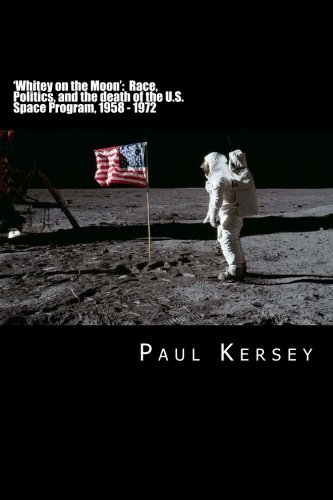
'Whitey on the Moon': Race, Politics, and the death of the U.S. Space Program, 1958 - 1972
Overview
We went to the moon. This is a fact. Indisputable, except to those conspiracy theorists clinging to their belief some sinister plot was hatched by the U.S. Government to conceal our inability to navigate to earth's natural satellite. On July 20, 1969, man first stood on the moon; on December 18, 1972, man stood on the moon for the last time. What happened to end the dream of space exploration, left instead to the colorful imagination of Trekkies and science fiction fans believing some diverse band of humans could navigate the heavens in a Utopian future? The US Government neutered NASA by forcing a much different mission upon the space agency: diversity and the promotion of blacks. We went to the moon. On multiple occasions. When NASA was nearly all-white, with an all-white astronaut team. But in 1972, the Apollo program was grounded, with the Space Shuttle program becoming a glorified experiment in social engineering and special interest group cheer-leading. Each successive launch included women, blacks, and other racial minorities, not for the sake of exploration, but for the sake of gender and racial equality. The glory of NASA and mankind's great moments in space exploration were all milestones performed under the watchful of an almost completely white NASA, devoid of the hindrance of affirmative action programs and the shackles of Equal Employment Opportunity mandates. The mandate then was to get the moon; the mandate soon after was the promotion of blackness and diversity, at the expense of the initial dream of exploring the stars. 'Whitey on the Moon': Race, Politics, and the death of the U.S. Space Program, 1958 - 1972 tells the shocking story of NASA's demise from an angle never-before told: the racial angle. Learn the story of Captain Ed Dwight, the black Air Force pilot the Kennedy Administration tried to force on NASA; learn about how General Curtis LeMay and Lt. Colonel Chuck Yeager demanded accountability and stood against what the latter deemed "reverse racism" in how the Kennedy Administration forced a black astronaut candidate on NASA just for the sake of having a black astronaut candidate. Learn about the "Poor People's Campaign" (led by Rev. Ralph Abernathy), which protested the launch of Apollo 11 on July 16th, 1969, by showing up with a horse and buggy. Rev. Abernathy demanded the money going to Apollo and space exploration be redistributed to fight poverty and starvation in America's inner cities... And his vision won out. The final chapters of the book deal not with the exploration and colonization of new worlds, but the redistributing of wealth to pay for EBT/SNAP Food Stamps cards and other welfare payouts. We could have been on Mars, but we had to fund Black-Run American instead...


36,114 currently reading


152,889 want to read
Sponsored
Sponsored
Book details & editions
| ISBN | 1519461267 |
| Publisher | Createspace Independent Publishing Platform |
| Publication date | July 2014 |
| Language | English |
| Pages | 246 pages |
Sponsored
Sponsored







Ratings & Reviews
5 ★
42%
4 ★
34%
3 ★
16%
2 ★
5%
1 ★
3%
3.95
BlueReads Choice
Sponsored
Write a Review
Community Reviews
Sort by: