Sponsored
Sponsored

Free Edition
Verified Content
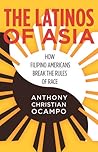
Brown Skin, White Minds: Filipino -/ American Postcolonial Psychology
Overview
Filipino Americans have a long and rich history with and within the United States, and they are currently the second largest Asian group in the country. However, very little is known about how their historical and contemporary relationship with America may shape their psychological experiences. The most insidious psychological consequence of their historical and contemporary experiences is colonial mentality or internalized oppression. Some common manifestations of this phenomenon are described below:
*Skin-whitening products are used often by Filipinos in the Philippines to make their skins lighter. Skin whitening clinics and businesses are popular in the Philippines as well. The "beautiful" people such as actors and other celebrities endorse these skin-whitening procedures. Children are told to stay away from the sun so they do not get "too dark." Many Filipinos also regard anything "imported" to be more special than anything "local" or made in the Philippines. *In the United States, many Filipino Americans make fun of "fresh-off-the-boats" (FOBs) or those who speak English with Filipino accents. Many Filipino Americans try to dilute their "Filipino-ness" by saying that they are mixed with some other races. Also, many Filipino Americans regard Filipinos in the Philippines, and pretty much everything about the Philippines, to be of "lower class" and those of the "third world." The historical and contemporary reasons for why Filipino -/ Americans display these attitudes, beliefs, and behaviors - often referred to as colonial mentality - are explored in Brown Skin, White Minds. This book is a peer-reviewed publication that integrates knowledge from multiple scholarly and scientific disciplines to identify the past and current catalysts for such self-denigrating attitudes and behaviors. It takes the reader from indigenous Tao culture, Spanish and American colonialism, colonial mentality or internalized oppression along with its implications on Kapwa, identity, and mental health, to decolonization in the clinical, community, and research settings. This book is intended for the entire community - teachers, researchers, students, and service providers interested in or who are working with Filipinos and Filipino Americans, or those who are interested in the psychological consequences of colonialism and oppression. This book may serve as a tool for remembering the past and as a tool for awakening to address the present.
*Skin-whitening products are used often by Filipinos in the Philippines to make their skins lighter. Skin whitening clinics and businesses are popular in the Philippines as well. The "beautiful" people such as actors and other celebrities endorse these skin-whitening procedures. Children are told to stay away from the sun so they do not get "too dark." Many Filipinos also regard anything "imported" to be more special than anything "local" or made in the Philippines. *In the United States, many Filipino Americans make fun of "fresh-off-the-boats" (FOBs) or those who speak English with Filipino accents. Many Filipino Americans try to dilute their "Filipino-ness" by saying that they are mixed with some other races. Also, many Filipino Americans regard Filipinos in the Philippines, and pretty much everything about the Philippines, to be of "lower class" and those of the "third world." The historical and contemporary reasons for why Filipino -/ Americans display these attitudes, beliefs, and behaviors - often referred to as colonial mentality - are explored in Brown Skin, White Minds. This book is a peer-reviewed publication that integrates knowledge from multiple scholarly and scientific disciplines to identify the past and current catalysts for such self-denigrating attitudes and behaviors. It takes the reader from indigenous Tao culture, Spanish and American colonialism, colonial mentality or internalized oppression along with its implications on Kapwa, identity, and mental health, to decolonization in the clinical, community, and research settings. This book is intended for the entire community - teachers, researchers, students, and service providers interested in or who are working with Filipinos and Filipino Americans, or those who are interested in the psychological consequences of colonialism and oppression. This book may serve as a tool for remembering the past and as a tool for awakening to address the present.


36,114 currently reading


152,889 want to read
Sponsored
Sponsored
Book details & editions
| ISBN | 1623962072 |
| Publisher | |
| Publication date | February 2013 |
| Language | English |
| Pages | 226 pages |
Sponsored
Sponsored



Ratings & Reviews
5 ★
58%
4 ★
28%
3 ★
10%
2 ★
3%
1 ★
1%
4.27
BlueReads Choice
Sponsored
Write a Review
Community Reviews
Sort by: