Sponsored
Sponsored

Free Edition
Verified Content
Menosprecio de corte y alabanza de aldea
Overview
The court is a perpetuall dreame, a botomelesse whorlepole, an inchaunted phantasy, and a mase: when he is in, he cannot get out till he be morfounded.
This volume is an old-spelling edition Sir Francis Bryan’s 1548 translation of Antonio de Guevara’s 'Menosprecio de corte y alabanza de aldea' (1539), a treatise in the contemptus mundi vein exhorting the reader to quit the court and live in the country. Although de Guevara has not been edited and published in English in over a century, during the mid-sixteenth century his prose was among the most read in all of Europe, translated into every major language. (Merik Casaubon remarked that no book besides the Bible was as often translated and reprinted as Guevara’s 'Dial of Princes', a.k.a. 'The Golden Boke of Marcus Aurelius'.) In 'A Looking Glasse for the Court', one will find a convergence of the courtly and medieval traditions with a heady infusion of classical erudition (sometimes spurious, of Guevara’s own invention). It should be noted that while our text is based on the 1548 translation, our title is taken from the the later 1575 edition. Guevara’s prologue, which appears in the original 1539 edition, has been newly translated and restored by Jessica Sequeira, as it has not previously appeared in English.
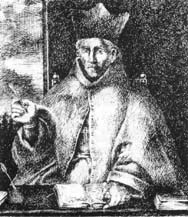
ANTONIO DE GUEVARA was born around 1480, likely in the Cantabrian village of Treceño. In 1492, Guevara went to the royal court, where he would be for roughly the next two decades. In 1506, he joined the Franciscan Order. In 1523, he was appointed to serve as a preacher in the royal chapel, the first of several positions to which the Holy Roman Emperer Charles V appointed him. In 1528, 'Libro áureo de Marco Aurelia emperador y elocuentísimo orador' was published (translated in 1534 by Lord Berners into English as 'The Golden Boke of Marcus Aurelius Emperour'). This book, which would later be reissued in an expanded and revised form, was eventually published in every major European language. In 1529, he was appointed by the the Emperor to the bishopric of Guadix and in 1537, to the bishopric of Mondoñedo. In 1539, five of his books were published, four of which were bound together, including 'Menosprecio de corte y alabanza de aldea'. Guevara’s last four books, published in the 1540s, represent a departure from the concerns of his preceding work and deal with Christianity. He died on Good Friday in 1545.
This volume is an old-spelling edition Sir Francis Bryan’s 1548 translation of Antonio de Guevara’s 'Menosprecio de corte y alabanza de aldea' (1539), a treatise in the contemptus mundi vein exhorting the reader to quit the court and live in the country. Although de Guevara has not been edited and published in English in over a century, during the mid-sixteenth century his prose was among the most read in all of Europe, translated into every major language. (Merik Casaubon remarked that no book besides the Bible was as often translated and reprinted as Guevara’s 'Dial of Princes', a.k.a. 'The Golden Boke of Marcus Aurelius'.) In 'A Looking Glasse for the Court', one will find a convergence of the courtly and medieval traditions with a heady infusion of classical erudition (sometimes spurious, of Guevara’s own invention). It should be noted that while our text is based on the 1548 translation, our title is taken from the the later 1575 edition. Guevara’s prologue, which appears in the original 1539 edition, has been newly translated and restored by Jessica Sequeira, as it has not previously appeared in English.
ANTONIO DE GUEVARA was born around 1480, likely in the Cantabrian village of Treceño. In 1492, Guevara went to the royal court, where he would be for roughly the next two decades. In 1506, he joined the Franciscan Order. In 1523, he was appointed to serve as a preacher in the royal chapel, the first of several positions to which the Holy Roman Emperer Charles V appointed him. In 1528, 'Libro áureo de Marco Aurelia emperador y elocuentísimo orador' was published (translated in 1534 by Lord Berners into English as 'The Golden Boke of Marcus Aurelius Emperour'). This book, which would later be reissued in an expanded and revised form, was eventually published in every major European language. In 1529, he was appointed by the the Emperor to the bishopric of Guadix and in 1537, to the bishopric of Mondoñedo. In 1539, five of his books were published, four of which were bound together, including 'Menosprecio de corte y alabanza de aldea'. Guevara’s last four books, published in the 1540s, represent a departure from the concerns of his preceding work and deal with Christianity. He died on Good Friday in 1545.
Finding high-quality digital editions shouldn't be a challenge. With instant access to our curated library, you can start your journey with Aftermath immediately. Whether on your phone, tablet, or e-reader, the story of Raleigh's life is presented in a format designed for modern readers.
To get started finding Menosprecio de corte y alabanza de aldea, you are right to find our website which has a comprehensive collection of titles listed. Our library is one of the most comprehensive resources for free digital reading materials, providing verified and safe content for book lovers worldwide.


36,114 currently reading


152,889 want to read
Sponsored
Sponsored
Book details & editions
| ISBN | 8412469860 |
| Publisher | N/A |
| Publication date | N/A |
| Language | English |
| Pages | pages |
| Reading Options | PDF · EPUB · Mobi |
Sponsored
Sponsored



Ratings & Reviews
5 ★
81.4%
4 ★
14.6%
3 ★
3%
2 ★
0.6%
1 ★
0.4%
4.76
BlueReads Choice
Sponsored
Write a Review
Community Reviews
Sort by:

